Japanese Symbolism in Garden Design
Japanese symbolism in garden design is explained. There is a lot of controversy about this Japanese garden design concept. Hear both sides of the story on symbolism in Japanese gardens.
The main object of Japanese gardens is to copy the beauty of nature and to bring it home. There is little space in Japan. It is not possible for the average Japanese family to have a large garden. They adapted to be able to enjoy nature.
This adaptation is most obvious in the art of Bonsai. This is the art of cultivating miniature trees. Although the garden is small, it can still have a beautiful tree! The inventive Japanese have used other natural materials to represent objects that would just be too large for their gardens.
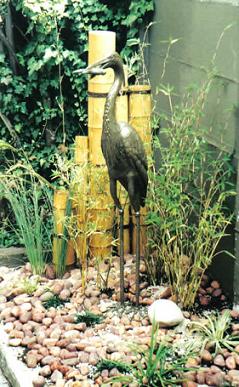
This practice most probably led to the mystique of Japanese symbolism in gardening. One viewpoint is that symbolism has really been blown out of proportion and detracts from the main object of Japanese gardens, i.e. to copy the beauty of nature.
Every culture has their symbols, myths, urban legends, etc. Some people believe in it, others don’t. A little bit of symbolism could be healthy, e.g. the Stripes and Stars symbolize liberty and freedom to patriotic Americans, the sun representing god, unified the ancient Egyptians, etc.
Symbolism is used in Japanese garden design. Just remember that you should not try to symbolize everything in the garden. This will detract from purpose of the garden. Use symbolism in moderation, and enjoy your garden.
The following table contains common Oriental and Japanese symbols and their meaning:
| Item | Symbolic Meaning |
|---|---|
| Japanese Flowering Cherry | Celebrate change of seasons |
| Japanese maple | Autumn welcomed as a friend |
| Pinus densiflora | Eternity |
| Mounds | Mountain ranges |
| Pond in shape of tortoise | Longevity |
| Crane | Longevity |
| 1 Rock | 1 of 3 Mythical Islands, a guarantee of prosperity |
| A line of rocks | A line of boats sailing toward the Isles of the Immortals |
| Shumisen – 1 Central rock | Central pillar that supports the heavens |
| 3 Rocks | The Buddist trinity |
| Island in pond | Paradise – land of paradise |
| Guzei – Red bridge | Route blessed to take to salvation |
| Split bridge | Bridge split to prevent evil spirits from crossing (evil spirits are believed to only move in straight lines) |
| Mountain | Assertive, hard, uncompromising (Yang) |
| Water | Intellectual force, softness of water associated with feelings (Yin) |
| Wooden terrace jutting over picturesque garden | Constant need to be with nature |
| Gravel | Water |
| Upturned roof edges | The giant wings of the Phoenix in flight Phoenix – symbol of rebirth |
Attention: This is limited to the next 7 lucky individuals
“The FREE Shed Plan and Garden Improvement Project ”


